
Security Gates or a Security Door: Which Does Your Property Actually Need?
Most people who call us about security have already decided what they want. They want a gate. Or they want a stronger front door. What they have rarely done is work out which one actually solves the problem they are worried about — and the two are not interchangeable.
Here is how we talk it through on a survey.
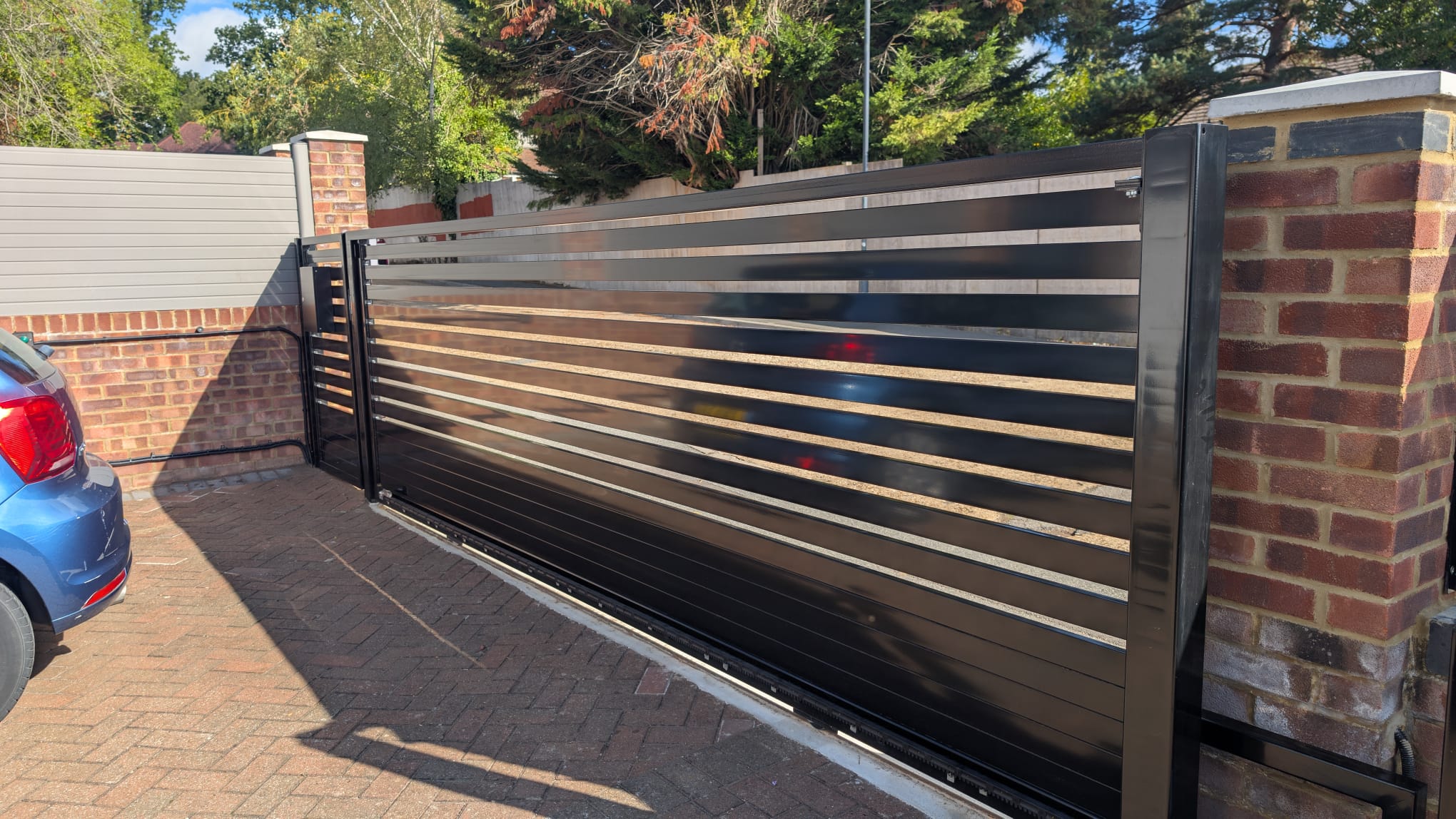
A gate defends the boundary. The drive, the side return, the car, the tools.
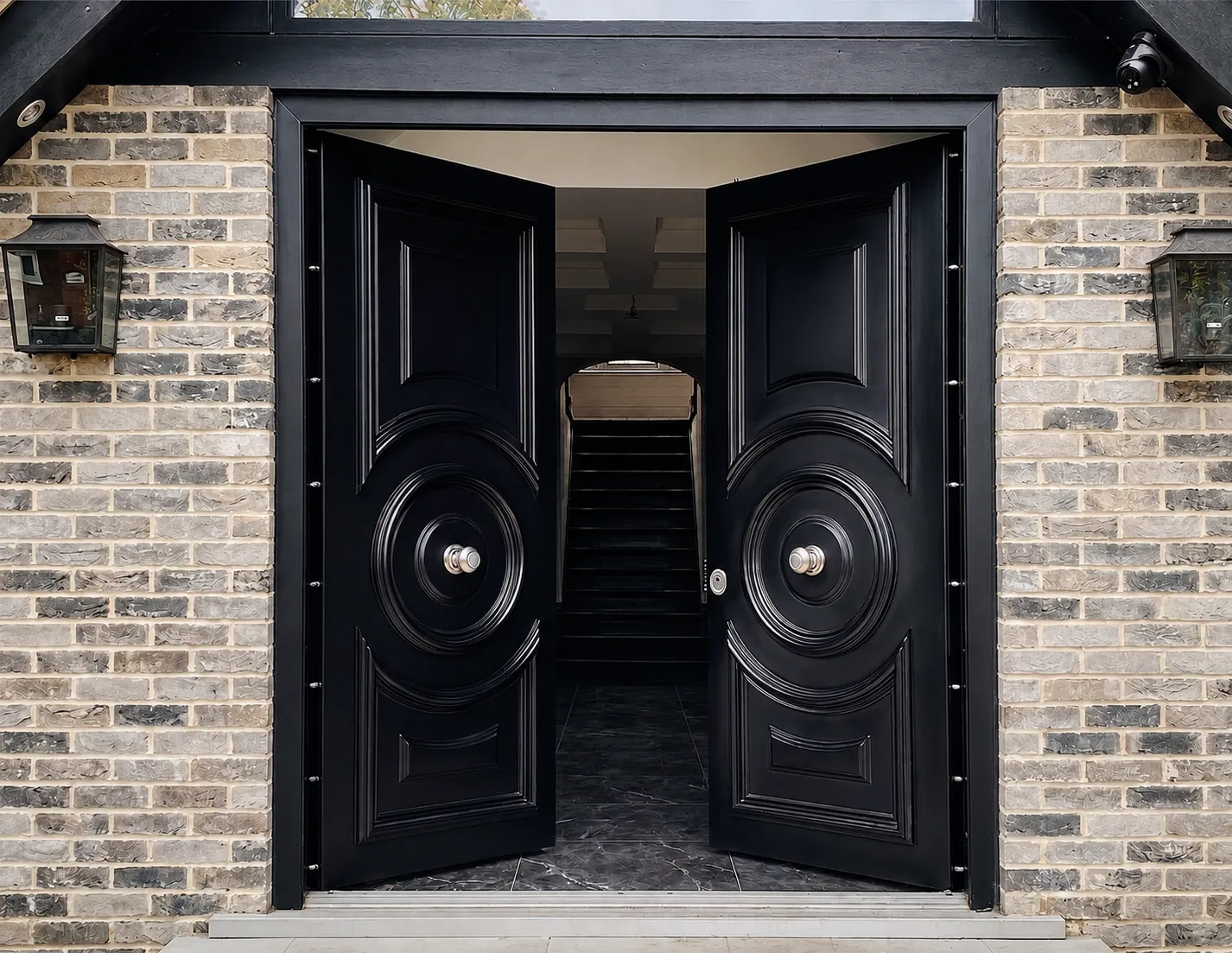
A door defends the building. Everything — and everybody — inside it.
Start with where the risk actually is
A gate and a door defend different lines.
A gate defends the boundary: the driveway, the side return, the alleyway, the car on the drive, the bikes in the garden, the tools in the garage. It works mostly by being seen. A visible, well-built gate moves an opportunist along before they commit to anything.
A door defends the building: everything and everybody inside it. It works by holding when someone has already decided to try.
So the first question is not “gate or door”, it is: what am I actually protecting, and how determined is the person I am protecting it from?
What a security gate is best at
Gates are the right answer when the vulnerability is outside the walls.
- Vehicles and equipment on the drive. No front door protects a car, a van or a set of ladders.
- Access routes. Side gates and alleyway gates close off the quiet, unobserved approaches — which is where most break-ins are attempted from, not the front.
- Deterrence. A gate is the single most visible security signal a property gives off. Most opportunists never test it.
- Controlled entry. Automation, intercoms and access control let you decide who comes onto the property at all, which no door can do.
If you have a driveway, a side return or a rear access route, a gate is usually the higher -value first move — it stops people getting near the house at all.
What a security door is best at
Doors are the right answer when the vulnerability is the entrance itself.
- Terraced and flat frontages. If the front door opens more or less straight onto the pavement, there is no boundary to gate. The door is the boundary.
- Forced entry, not opportunism. A standard front door — even a good-looking one — usually fails at the frame or the lock, not the panel. A door engineered as a security product resists at every edge.
- Insurance and specification. Where a property has a high-value contents policy, it is usually the door specification that gets asked about, not the gate.
- Living with it every day. A door is the thing you touch every time you come home. It has to feel right, not just test well.
Side by side
| Security gate | Security door | |
|---|---|---|
| Defends | The boundary | The building |
| Works by | Being seen | Holding |
| Stops | Opportunists, before they approach | Forced entry, once they have committed |
| Protects | Vehicles, tools, bikes, outbuildings | People and contents |
| Needs | A driveway, side return or set-back frontage | Nothing — every property has a front door |
| Also gives you | Automation, intercom, access control | Insulation, and the look of the house |
The honest overlap
Plenty of properties need both, and they are not competing purchases — they are layers.
A gate buys time and deters. A door holds when the deterrent did not work. On the London properties we look after, the pattern is usually: gate the vehicle access and the side return, then upgrade the front door as the second layer.
If budget only stretches to one this year: is there something valuable outside the house? Start with the gate. Is the front door the only thing between the street and your family? Start with the door.
A quick checklist
Work down this list. Whichever column collects more ticks is where to start.
Point to a gate
- Off-street parking, driveway or hardstanding
- A side return, alleyway or rear access path
- Outbuildings, garage, bikes, tools or garden equipment
- You want to control or log who enters the property
- The property is set back from the road
Point to a door
- The front door opens onto the pavement or a shared landing
- The existing door or frame is timber, uPVC, or original to the house
- You have had a break-in attempt at the door before
- Your insurer has asked about door specification
- The entrance is the first thing anyone sees and it currently lets the house down
Who does what
We have built and installed security gates across London for more than 40 years — driveway gates, side gates, retractable grilles, perimeter fencing and the automation behind them. That is what this business does.
Front doors are a different discipline, so they have their own business. Security Doors ’R’ Us is our sister company, run by the same family, and it does nothing but made-to-measure security doors — steel, aluminium, pivot and fully bespoke. Same survey-first approach, same installers, different product.
If you are not sure which line you need to defend, ask either of us. It is a five-minute conversation and we will tell you honestly if the answer is the other one.
 Back to Blog