
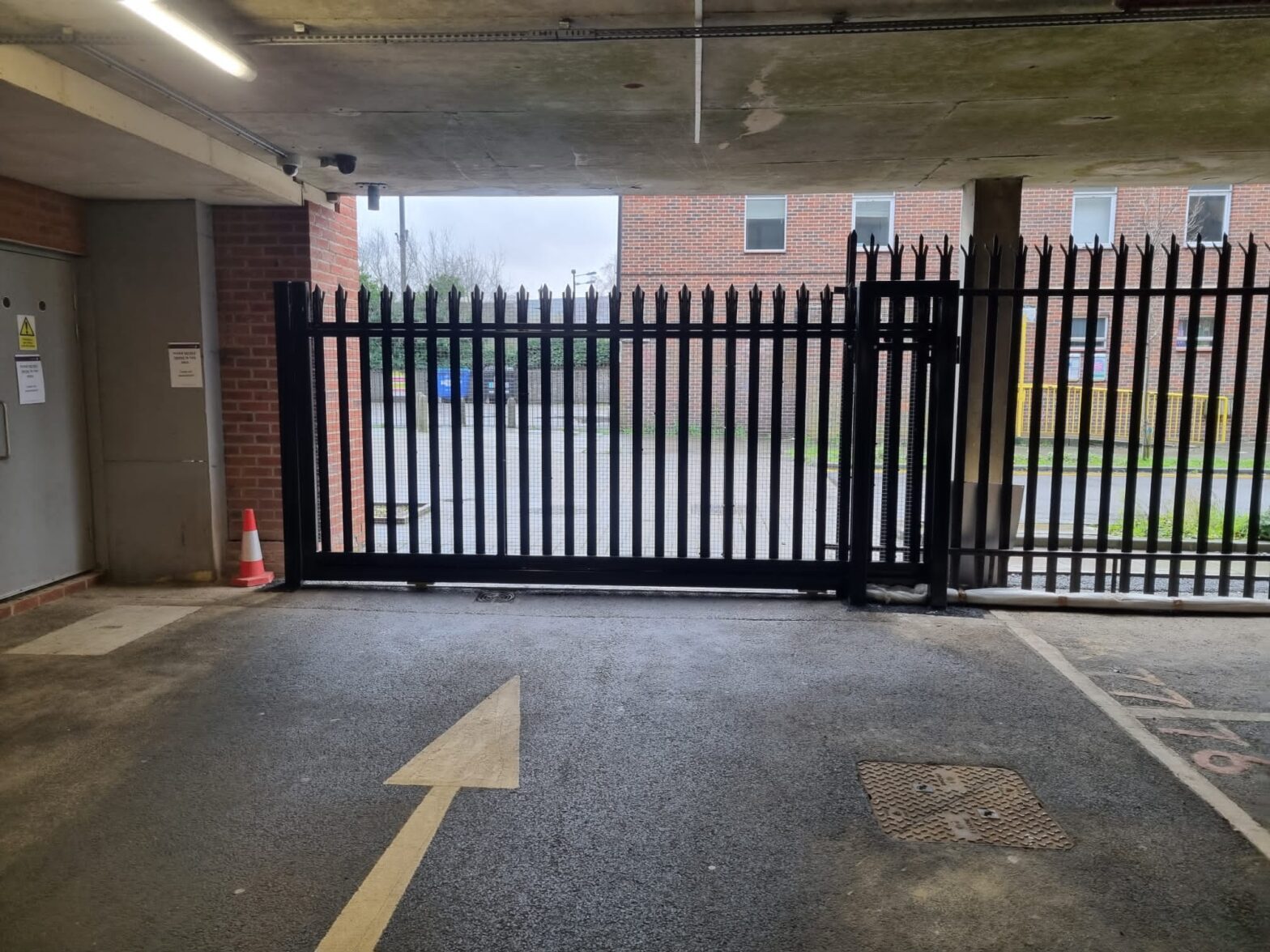
UK homeowners and businesses aiming for better security and ease of access should know the difference between electric gates and remote-controlled gates. Although both provide automated solutions, their operation and features vary, offering different advantages depending on your property. Evaluating electric gates vs remote-controlled gates helps you select the right system for safety, access management, and lasting reliability. Understanding these distinctions keeps your property secure while adding value and practical convenience.
For personalised guidance and professional installation, you can contact Security Gates or book a demo today to explore which system is best for your property.
Electric Gates
An electric gate is a powered gate system that opens and closes automatically using an electric motor. These gates are available in several types, including sliding gates, swing gates, and bi-fold gates, giving you flexibility depending on your driveway or entrance layout. Electric gates can also integrate with advanced access controls such as intercom systems, keypads, and GSM-enabled devices. This allows homeowners and businesses to monitor and manage entry conveniently, even from a remote location.
The main advantage of an electric gate is that the automation is built into the gate’s mechanism. It can operate via push-button, timer, or smartphone integration, providing a high level of security and convenience.
Remote-Controlled Gates
A remote-controlled gate, on the other hand, is a system where the gate motor is activated using a wireless remote or fob. While many remote-controlled gates are also electric, the term highlights the method of access rather than the gate’s structure. Remote-controlled gates allow for quick entry without leaving your vehicle, making them particularly popular for residential driveways and commercial sites.
The key difference between a remote-controlled gate and an electric gate lies in access method versus gate mechanics. An electric gate refers to the motorised system itself, while a remote-controlled gate focuses on the device used to operate the motor.
Common Misconceptions
Many people assume that all electric gates are remote-controlled, but this is not the case. Electric gates can be operated via push-button, intercom, or smartphone, and remote control is just one option. Similarly, not all remote-controlled gates are fully automated. Some may require manual operation to unlock or open partially.
Contact Security Gates today to find out which gate system is ideal for your home or business and enjoy a combination of convenience, security, and style.
Key Differences Between Electric and Remote-Controlled Gates
Choosing the right gate system for your property requires careful consideration. Electric and remote-controlled gates both provide convenience, security, and improved property access, but they differ in operation, integration, safety, and installation requirements. Understanding these differences ensures you make the best choice for your home or business in the UK.
Method of Operation
1. Electric Gates
Electric gates are highly versatile, offering multiple ways to access your property. You can operate them via keypads, intercoms, smartphone apps, GSM SIM-based systems, or traditional remote fobs. This flexibility is especially useful for busy households or commercial properties with multiple users. For instance, a homeowner could open the gate from their smartphone while away, while employees at a business can use individual access codes.
2. Remote-Controlled Gates
Remote-controlled gates are primarily operated through a handheld remote, making them simple and convenient. This system is ideal for smaller properties or when ease of use is the priority. While they may not offer as many access options as electric gates, remote-controlled gates provide reliable performance and can be a cost-effective solution without sacrificing security.
Access Control and Smart Integration
Electric gates excel in smart integration. In the UK, they can connect to home automation systems, CCTV cameras, alarms, and lighting. GSM SIM-based systems allow secure mobile access, while multi-user management is ideal for commercial properties.
Remote-controlled gates also provide some integration capabilities, though usually in a simpler form. They work well for basic access needs and straightforward automation but may not support complex smart systems like app control or intercom integration.
Key Access Considerations:
- Electric gates allow remote monitoring and control from anywhere.
- Multi-user access is easier to manage with electric gates, particularly for businesses.
- Remote-controlled gates are best suited for smaller properties or single-user households.
Safety Features
Safety should be a top priority for any gate system. Electric gates often include advanced features such as photocells, safety edges, and obstacle detection systems to prevent accidents. Remote-controlled gates may have similar features depending on the system quality, but electric gates generally offer more comprehensive protection.
Both systems in the UK must comply with legal safety standards, including the Machine Directive 2006/42/EC and BS EN 12453. Compliance ensures gates operate reliably while minimising risk to users, vehicles, and property.
Installation Complexity
Electric gates usually require professional installation due to their wiring needs, control board configuration, and integration with smart systems. Proper installation guarantees safety, performance, and adherence to UK regulations.
Remote-controlled gates are simpler to install and can sometimes be managed with less technical expertise. However, even these systems benefit from professional guidance to ensure compliance with safety standards and long-term reliability.
Installation Checklist for UK Properties:
- Ensure correct wiring and power supply for electric gates.
- Verify control board setup and programming for multi-user access.
- Confirm obstacle detection and safety features are functional.
- Engage professional installers to comply with UK regulations.
Pros and Cons of Each Gate System
Choosing the right gate system for your property can feel like a big decision. In the UK, both homeowners and businesses often debate between electric gates and remote-controlled gates. Each system offers unique benefits and potential drawbacks.
Electric Gates – Advantages
Electric gates are one of the most popular choices in the UK for homeowners and commercial properties. Their primary appeal lies in security and convenience. Here are the key advantages:
- Higher Security: Electric gates provide a strong physical barrier that deters intruders and unauthorised access. They are ideal for protecting both residential properties and commercial premises.
- Multiple Access Control Options: With electric gates, you can choose from a range of access methods, including keypads, intercoms, smartphone apps, and remote fobs. This flexibility allows precise control over who can enter your property.
- Property Value Increase: Automated gates are often seen as a premium feature. Investing in electric gates can enhance your property’s appeal and potentially increase its market value.
- Suitable for Large Driveways and Commercial Use: Electric gates work well for long driveways or high-traffic entrances. They are perfect for commercial sites where smooth, secure entry is essential.
Electric gates combine security, convenience, and long-term investment value, making them a compelling option for many UK property owners.
Electric Gates – Disadvantages
While electric gates offer many benefits, there are certain factors to consider:
- Higher Upfront Cost: Installation and equipment costs are generally higher than those of remote-controlled gates. For smaller budgets, this may be a limiting factor.
- Electrical Dependency: Electric gates rely on a continuous power supply. In the event of a power outage, the gates may temporarily become inoperable unless a backup system is in place.
- Maintenance Requirements: Motors, sensors, and control systems require regular maintenance to ensure smooth operation. Neglecting this can lead to costly repairs over time.
These factors should not necessarily discourage you, but are important considerations when planning your gate system.
Remote-Controlled Gates – Advantages
Remote-controlled gates provide a more straightforward and budget-friendly solution for many UK properties. Key advantages include:
- Convenience: Open and close your gate from your vehicle with a simple remote, reducing hassle during daily use.
- Simple Operation: Remote-controlled gates are easy to use, even for households with children or elderly members.
- Lower Initial Complexity: Installation is typically simpler and faster compared to fully electric gates, reducing both time and upfront costs.
Remote-controlled gates offer practical benefits for those seeking convenience without a complex system.
Remote-Controlled Gates – Disadvantages
However, there are some limitations to consider:
- Limited Access Flexibility: Most remote-controlled gates operate with a set number of remotes, which can restrict who has access.
- Risk of Lost Remotes: Losing a remote can temporarily prevent entry, creating potential inconvenience for families or businesses.
- Less Scalable for Businesses: Remote-controlled gates are harder to integrate with advanced access control systems, making them less suitable for large commercial properties.
Making the Right Choice
Ultimately, the decision between electric gates and remote-controlled gates depends on your priorities.
- If security, scalability, and long-term investment are your main concerns, electric gates are the preferred option.
- If convenience, simplicity, and lower upfront costs are more important, a remote-controlled gate may be sufficient.
Electric and Remote-Controlled Gates
Installing a gate at your property can enhance security, convenience, and curb appeal. In the UK, homeowners often debate between electric gates and remote-controlled gates. While these terms are sometimes used interchangeably, they have important differences in operation, access control, safety features, installation requirements, and overall functionality.
How They Differ in Operation
Electric gates are powered systems that can be automated to open and close via a motor, providing consistent, reliable operation. Remote-controlled gates, on the other hand, focus on access method. They may include an electric motor but rely on a remote fob or smartphone to control movement. This distinction matters when considering convenience, daily use, and potential upgrades.
Access Control and Safety Features
Modern electric and remote-controlled gates offer multiple access options, including keypad entry, intercom systems, and smartphone apps. Safety features such as photocells, safety edges, and automatic stop sensors are essential, especially in busy households or commercial settings. These systems ensure the gate reacts safely to obstacles and protects both people and vehicles.
Installation Requirements
Professional installation is critical to meet UK safety regulations and ensure long-term reliability. Gate systems must be correctly wired, balanced, and aligned to prevent motor strain or operational failures. Choosing a qualified installer reduces risks and guarantees compliance with safety standards.
UK Planning Permission Considerations
Planning permission may be required for certain gate installations in the UK. Height restrictions are important, particularly near highways, to ensure visibility and prevent accidents. Gates installed on listed buildings or within conservation areas often require approval from local councils. Understanding these requirements early can save time and avoid fines.
UK Safety and Legal Compliance
Electric and remote-controlled gates must meet mandatory safety standards, including CE or UKCA marking requirements. Professional installation ensures compliance with these regulations, protecting homeowners from liability and maintaining insurance coverage. Investing in a certified installer is a smart choice that adds peace of mind.
Typical UK Costs
Installation costs for electric gates typically range from £2,000 to £5,000 depending on gate type, size, and complexity. Ongoing maintenance, such as motor servicing, lubrication, and safety checks, averages a few hundred pounds per year. Regular servicing prevents breakdowns and prolongs the life of your gate system.
Weather Considerations in the UK
UK weather can be challenging for gate systems. Rain, frost, and cold temperatures can affect motors, hinges, and electronic components. Choosing weather-resistant materials and components, and ensuring proper drainage around the gate, helps maintain smooth operation throughout the year.
Your Friendly Gate Experts Are Here to Help
Keeping your home or business safe doesn’t have to be complicated. At Security Gates ‘R’ Us Ltd, we design bespoke gates, including bar grille doors and driveway gates, tailored to your needs. Our friendly team ensures installations are smooth and stress-free. Call us today for a free consultation or same-day survey on 07401 217 653 or 0208 4322 999, or drop us an email at albert@securitygatesrus.com.