
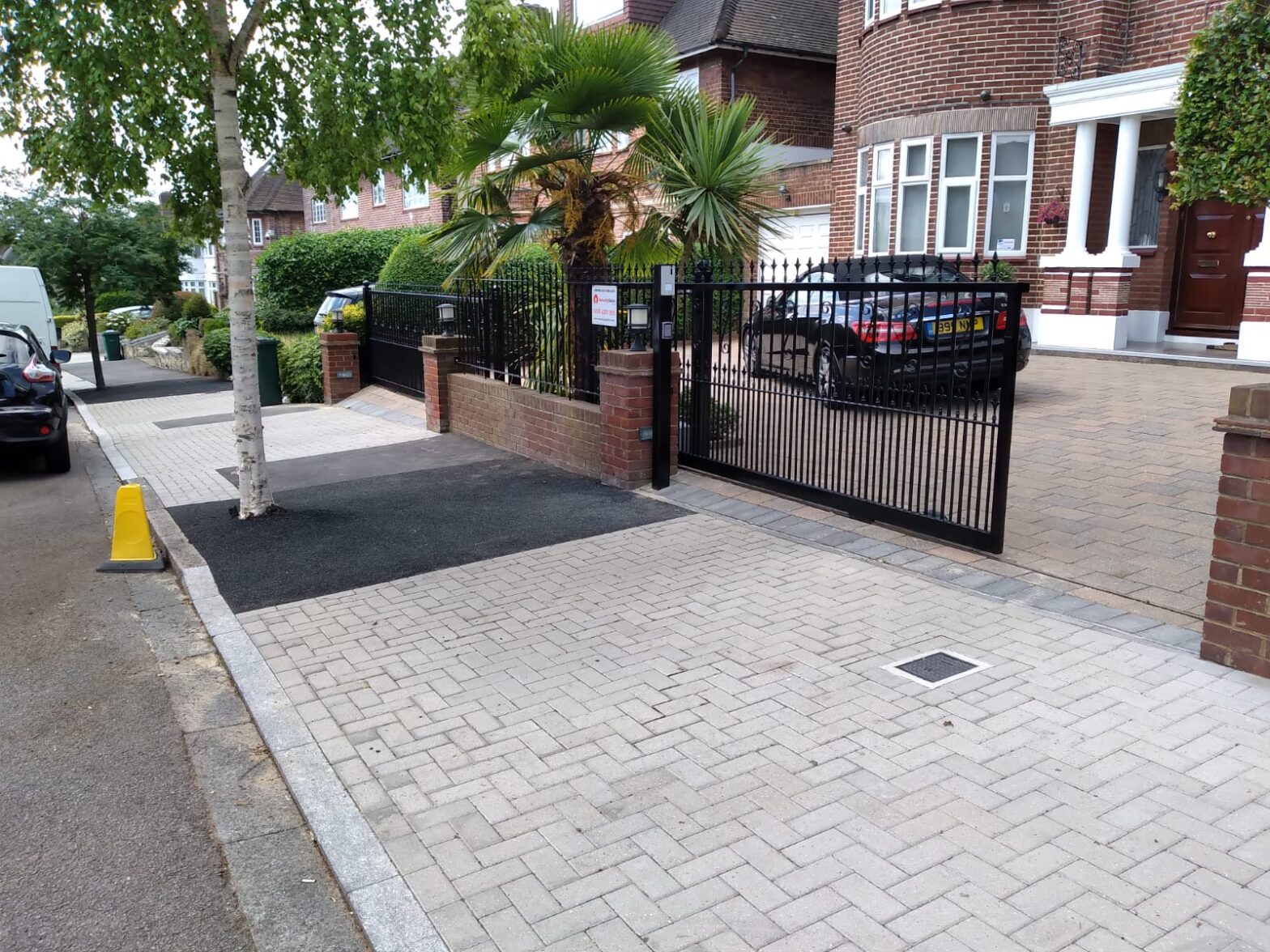
Security is no longer just about locks, fences, and alarms. Modern properties now rely on controlled access systems that shape how people enter, move through, and interact with a space. Today, security gates are not merely barriers at the edge of a driveway. They function as smart infrastructure that combines physical protection, technology, and design.
Within the first steps of this shift, property owners encounter different styles of entry solutions, including security gates, swing gates, sliding gate systems, sliding gates, and tracked sliding mechanisms. Each option serves the same fundamental goal, but the way they operate, the space they require, and the level of automation they offer can vary significantly. Understanding these differences is essential before making any investment.
Purpose and Concept of a Security Gate
A true security gate is more than a decorative entrance. While many gates are designed to look attractive, their primary purpose is protection and access control. A decorative gate may enhance curb appeal, but a security gate is engineered to manage who can enter, when they can enter, and under what conditions.
At its core, a modern gate system integrates durable materials, reliable mechanics, and smart technology. It creates a physical boundary while also acting as a checkpoint that filters movement. This distinction separates true security solutions from purely aesthetic installations.
The Three Jobs of Every Security Gate
Every effective gate performs three essential functions: deterrence, control, and visibility.
Deterrence comes from the mere presence of a strong, well-built gate. Intruders are far less likely to attempt access when they see a robust barrier that appears professionally installed and actively monitored.
Control refers to how the gate regulates entry and exit. This includes who can open it, how it opens, and whether access is manual or automated. Proper control prevents unauthorised movement while allowing smooth access for approved users.
Visibility ensures that property owners or security teams can observe activity at the entry point. This is where technology plays a key role, connecting gates with surveillance tools that monitor every interaction at the boundary.
How Security Gates Fit into a Wider System
A gate rarely works alone. It is most effective when integrated into a broader security network.
Gates and cameras work together to provide real-time monitoring. A camera positioned near the gate records visitors, captures license plates, and allows property owners to visually confirm identity before granting access.
Gates and intercoms create direct communication between visitors and those inside the property. Instead of opening blindly, users can speak to guests, delivery drivers, or service personnel before allowing entry.
Gates and keypads, RFID, or remotes add flexibility and convenience. Residents can use personal remotes, employees can swipe access cards, and temporary codes can be issued to contractors or guests. This layered approach makes modern gates both secure and user-friendly.
Core Decision Framework for Choosing the Right Gate
Selecting the best gate starts with three simple questions that guide every decision.
How much space do I have?
Properties with limited driveway depth may struggle with traditional swing systems, while those with wider entrances might accommodate multiple styles. Space constraints often determine whether a swinging or sliding configuration is more practical.
How much traffic passes daily?
High-traffic locations such as commercial facilities, apartment complexes, or business parks require durable, fast-operating systems. Frequent use calls for reliable automation and minimal maintenance downtime.
How much automation do I want?
Some property owners prefer fully manual gates, while others want remote-controlled or app-based operation. The level of automation influences cost, installation complexity, and long-term convenience.
Manual Versus Automatic Gates
Manual gates remain a practical choice for smaller properties or locations where power access is limited. They are cost-effective, straightforward to maintain, and suitable for low-traffic areas.
Automatic gates, by contrast, offer seamless operation with the push of a button. They are ideal for homes and businesses that prioritise convenience and advanced security. Motorised systems can be paired with sensors, cameras, and intercoms for complete access control.
Sliding Versus Swing Gate Designs
Swing gates open inward or outward like a traditional door. They work best in properties with ample driveway space and are often chosen for their classic appearance.
Sliding designs move horizontally along a track, making them perfect for tight spaces or steep driveways. Tracked sliding systems provide stability and smooth movement even in high-use environments. Many commercial sites favour sliding solutions because they handle frequent traffic efficiently.
How Gates Operate: Manual vs. Automatic (What Powers the Gate?)
Choosing the right type of security gates for your property is not just about appearance. The way a gate moves, the power behind it, and how you interact with it all affect safety, convenience, and long-term value. Understanding how gates operate helps homeowners and business owners make smarter decisions that fit their lifestyle, budget, and security needs.
Some properties function perfectly with simple manual systems, while others benefit greatly from modern automated solutions. Below is a clear comparison that explains how both options work, when they make sense, and what you gain from each.
Manual Security Gates
Manual gates are exactly what they sound like. They require a person to physically open and close them by hand. While automation continues to grow in popularity, manual gates remain highly relevant in 2026 for certain types of properties.
When manual still makes sense in 2026
Manual systems work best in rural homes, secondary entrances, or areas with very low vehicle traffic. If your gate is rarely used or only serves as a backup entrance, automation may not be necessary. Many landowners and farm property owners still prefer manual setups because they are straightforward and dependable.
Strengths of manual gates
One of the biggest advantages of manual gates is reliability. Since they do not rely on electricity, motors, or sensors, there is far less that can malfunction. Maintenance costs are typically lower, and repairs are simple when needed. During power outages or storms, a manual gate continues to function without interruption.
Limitations of manual gates
The main drawback is convenience. Getting out of your vehicle in rain, heat, or at night can be frustrating. From a security standpoint, manual gates also depend heavily on human behaviour. If someone forgets to close the gate properly, your property becomes vulnerable.
Automatic Security Gates
Automatic gates use mechanical systems powered by electricity or solar energy to open and close without physical effort from the user. These systems are commonly installed in modern residential communities, commercial properties, and high-traffic areas.
What makes a gate automatic
Automatic gates rely on motors, sensors, and electronic controls. These components work together to detect vehicles, respond to remote commands, and move the gate smoothly along its track. Depending on the design, an automatic system can operate swing gates or a sliding gate that glides horizontally across the driveway.
Key features homeowners care about most
Remote access
Most automatic systems allow you to open the gate from your car using a remote control, smartphone app, or intercom system. This is especially useful in bad weather or at night.
Timers
Some systems can be programmed to open or close at specific times. This is ideal for businesses or gated communities with set operating hours.
Obstacle detection
Modern automatic sliding gates often include sensors that stop movement if a vehicle, person, or object is in the way. This adds an important layer of safety for children, pets, and vehicles.
Power backup
Many automatic systems include battery backups or solar options. This ensures your gate continues to work even during a blackout.
Choosing between swing and sliding movement
Your driveway layout plays a major role in selecting the right gate style. Properties with limited space may require sliding gates that move parallel to the fence line. These often use a tracked sliding mechanism that keeps the gate stable and aligned. Wider driveways or properties with more open space may be better suited for swing gates that open inward or outward like traditional doors.
Decision takeaway
Manual equals simplicity first. If your priority is durability, minimal maintenance, and independence from electricity, a manual system can serve you well.
Automatic equals control and convenience first. If you value security, technology, and ease of use, investing in an automated gate system is the smarter long-term choice.
How Gates Move: Sliding vs. Swing (What Path the Gate Takes)
How a gate moves is more than a mechanical detail. It directly affects security, usability, durability, and overall performance. Gate movement determines how easily people and vehicles can pass through, how much space is needed for installation, and how well the system works with modern access control technology. Whether for a home or commercial perimeter security, understanding gate movement helps you make a smarter choice.
Gates either slide horizontally along a fence line or swing open in an arc like a door. These movements influence installation, maintenance, and suitability for different properties. Choosing the right movement style ensures your gate not only looks good but also performs reliably over time.
Sliding Gates: A Space-Smart and High-Performance Option
Sliding gates move horizontally along a straight line, parallel to the fence, making them ideal for properties with limited, uneven, or steep driveways. Because they do not need clearance to swing open, they maximise space while maintaining reliable access control.
Tracked sliding gates run on a ground rail, which is durable but requires occasional cleaning, while cantilever sliding gates glide above the ground for a cleaner, low-maintenance option. Sliding gates also pair easily with modern access systems such as remotes, keypads, intercoms, and speed gates in high-traffic or high-security settings.
Key Advantages of Sliding Gates
- Compact footprint that saves driveway space
- Strong structural durability for frequent use
- Excellent compatibility with automation systems
- Ideal for commercial and gated community applications
Potential Drawbacks
- tracked sliding gates require regular track cleaning
- Higher upfront cost for cantilever designs
Swing Gates: A Classic and Traditional Choice
Swing gates operate similarly to a large door, opening inward or outward along a curved arc. This style is widely favoured in residential neighbourhoods because it has a timeless, elegant appearance that complements traditional architecture, luxury homes, and decorative fencing.
However, swing gates require ample clearance to function properly. If a driveway is narrow, sloped, or positioned close to a road, a swing gate may be inconvenient or even unsafe. Wind is another important consideration, as strong gusts can put pressure on hinges and gate operators over time.
Despite these limitations, swing gates remain a popular option for homeowners who prioritise aesthetics and simplicity. Their straightforward mechanical design often makes repairs easier and less expensive compared to more complex sliding systems.
Benefits of Swing Gates
- Classic and visually appealing design
- Simpler mechanics that are easy to maintain
- Works well for large, open driveways
Limitations of Swing Gates
- Requires significant opening space
- More vulnerable to wind resistance
- Less ideal for high-traffic commercial use
How Gate Movement Influences Security and Automation
Gate movement directly impacts how effective a system is at protecting property. Sliding gates generally provide stronger perimeter security for commercial and industrial sites because they are harder to force open and better suited for continuous operation.
Swing gates can still be secure, but they rely heavily on reinforced posts, heavy-duty hinges, and high-quality motors to withstand pressure or attempted tampering. Sliding gates, on the other hand, distribute force more evenly along their structure, making them naturally more resistant to impact or intrusion.
For properties that require fast entry and exit, sliding gates pair exceptionally well with automated technology, including speed gates that manage high volumes of vehicles or pedestrians efficiently while maintaining controlled access.
Choosing the Right Gate Based on Movement
Selecting between sliding and swing gates ultimately depends on your driveway layout, security priorities, and daily usage needs. Commercial properties and gated communities usually benefit from sliding systems due to their durability and efficiency. Residential properties with spacious driveways may prefer swing gates for their classic charm.
If your driveway is tight, steep, or busy, sliding gates are the smarter investment. If you have plenty of space and want a more traditional look, swing gates can be both beautiful and functional.
Choosing the Right Gate for Your Property (Practical Matchmaking)
Selecting the right gate for your property is not simply about appearance or following trends. The best choice comes from understanding how you actually live, how your property functions day to day, and what challenges your environment presents. A well-chosen gate should support your routine, improve your safety, and fit seamlessly into your space rather than create frustration or inconvenience.
Choosing by Property Type
Your property layout, size, and location play a major role in determining the most suitable gate system. Different environments demand different designs, mechanisms, and levels of automation.
Small urban home → automatic sliding
For compact urban homes, space is often limited. Driveways tend to be shorter, and outward or inward swinging gates can block vehicles, sidewalks, or streets. An automatic sliding gate is usually the most practical option because it moves sideways along a track rather than sweeping across your driveway.
This design maximises usable space while still delivering strong protection. Many homeowners in dense neighbourhoods also prefer tracked sliding gates because they operate smoothly and reliably even in tight environments. The automation adds convenience, especially for busy professionals who want quick access without leaving their car.
Large rural lot → manual swing or automatic swing
If you own a large rural property, you likely have more open space and fewer immediate spatial constraints. In this case, a manual swing gate can be an excellent low-maintenance and budget-friendly choice, particularly for long driveways with low daily traffic.
However, if convenience is a priority, an automatic swing gate can elevate both security and ease of use. It provides a classic, elegant entrance while allowing you to control access remotely. For expansive properties, swing gates often blend beautifully with natural surroundings, creating a welcoming yet secure boundary.
Business or warehouse → automatic sliding or cantilever
Commercial properties require gates that can handle frequent use, heavy vehicles, and strict security needs. Warehouses, factories, and logistics centres benefit greatly from automatic sliding gates because they are durable, fast, and efficient.
In high-traffic settings, cantilever sliding gates are particularly valuable since they do not rely on ground tracks that can be damaged by trucks or debris. Many businesses also integrate speed gates at pedestrian entrances to manage foot traffic while maintaining controlled access. Together, these systems create layered perimeter security without slowing daily operations.
Choosing by Priority
Your personal priorities should guide your decision just as much as your property type. Different gate styles serve different goals, so clarity about what matters most will help you make the right investment.
If you prioritise aesthetics → swing
Swing gates are timeless and visually striking. They frame your entrance beautifully and create a traditional, high-end appearance. For homeowners who care deeply about curb appeal, swing gates often feel more refined and architectural.
If you prioritise space efficiency → sliding
Sliding gates are ideal for properties with limited driveway depth or uneven terrain. They conserve space while still providing strong protection. This makes them a favourite choice for urban and suburban homeowners who want security without sacrificing practicality.
If you prioritise low maintenance → manual
Manual gates require fewer mechanical components and minimal upkeep. They are simple, reliable, and cost-effective. For property owners who prefer straightforward solutions, manual swing or sliding gates can be a sensible choice.
If you prioritise security and control → automatic
Automatic gates offer the highest level of control. With integrated access systems, cameras, intercoms, and remote controls, they significantly enhance safety. Whether residential or commercial, automation provides stronger perimeter security and greater peace of mind.
Cost Expectations at a High Level
Understanding general cost differences can help you plan your budget more realistically. While exact pricing varies, the overall pattern remains consistent across most properties.
Quick guide to typical investment levels
- Manual gates tend to have the lowest upfront cost
- Automatic swing gates sit in the mid-range
- Automatic sliding gates require more investment but deliver stronger long-term value
Manual systems are affordable because they use fewer mechanical parts. Automatic swing gates add motors, controls, and installation complexity, which increases cost but also improves convenience.
Automatic sliding gates usually require a higher initial budget, especially when paired with commercial-grade motors or cantilever sliding gates. However, they often last longer, perform better under heavy use, and reduce maintenance issues over time, making them a smart investment rather than just an expense.
Secure Your Property with Confidence
Choosing the right gate ensures your property is secure, practical, and visually appealing for years to come. At Security Gates ‘R’ Us Ltd, we specialise in manufacturing and installing bespoke security gates, grilles, railings, and fencing, all backed by a 10-year warranty and a price match guarantee. Our qualified engineers provide expert advice to help you select the perfect solution. Protect your home or business today—contact us at 07401 217 653 or visit securitygatesrus.com.